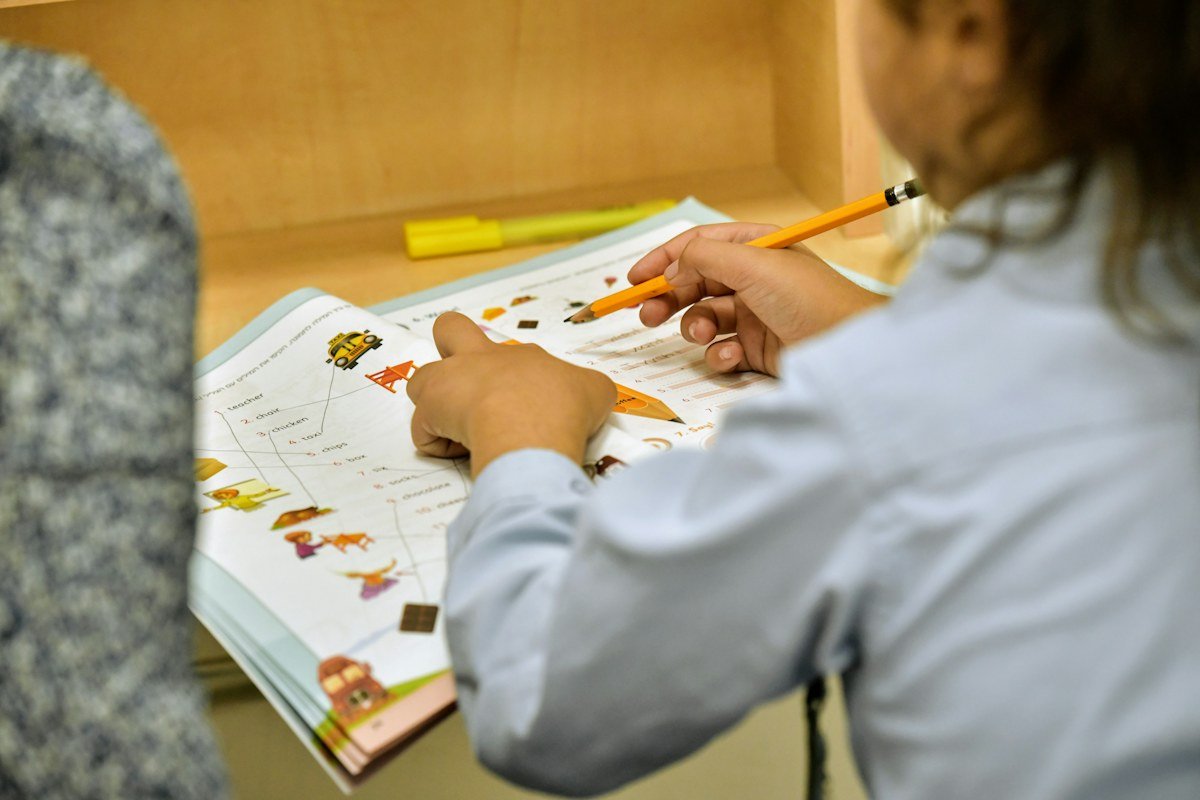
A first idea usually looks different by the time a child has tried to make it. A drawing changes when the pencil touches paper. A cardboard bridge needs another support. A piece of music sounds different when someone else joins in. Making gives children a useful reason to notice those differences and decide what to do next.
The first version is allowed to be rough
It is tempting to rush towards a neat finished piece. We make room for the less tidy stages: a sketch, a test, a mistake, and a second attempt. Children learn to ask what is working before they decide what to change. That habit matters in art and design, but it matters just as much in writing, science and mathematics.
A teacher can help by asking a precise question rather than taking over. Which part is strongest? What happens if the material bends? Who will use what you are making? A small question can move the work forward while leaving the decision with the child.
Materials make thinking visible
Paint, paper, wood, fabric and found objects each behave differently. Learning how to use them takes patience and care. Children discover that a good idea also needs a way to be made, and that choosing a tool is part of the thinking.
Working alongside others adds another layer. A shared project needs listening, a plan and a willingness to let someone else’s idea improve your own. It also gives children a chance to explain why they made a choice.
Show the work, talk about the work
When a piece is ready to share, the conversation need not stop at “I like it.” Children can describe what they tried, what changed and what they would do differently next time. That makes the finished work more meaningful. It shows the care behind it and reminds every child that creativity grows through practice.